Showing posts with label Community Farm. Show all posts

Sunday, 10 July 2016

Organisation of teams

Our current structure has a Steering committee of six and a Team leaders meeting with potentially 25 people present.

The smaller Steering Committee deals with the "boring" items like constitution, insurance, strategy, building plans and management issues.
Tudor -Steering Committee and Team leader 


Jim - Steering Committee and Treasurer 


Andrew - Steering Committee and Fruit team leader


Experienced or expert growers are a small group who decide on the crop rotation and varieties of seed to order. They also are frequently available to give very practical advice to Team Leaders and teams about growing issues.

Penny - Experienced Grower and Team Leader


Paul- Experienced Grower and Team Leader
Brian - Experienced Grower and past Team Leader,
now A team leader


The Team leaders deal with all the growing issues and include 10 vegetable group team leaders, a Fruit group and a Polytunnel leader, A team Site leader, Environment officer, Secretary and Treasurer. 
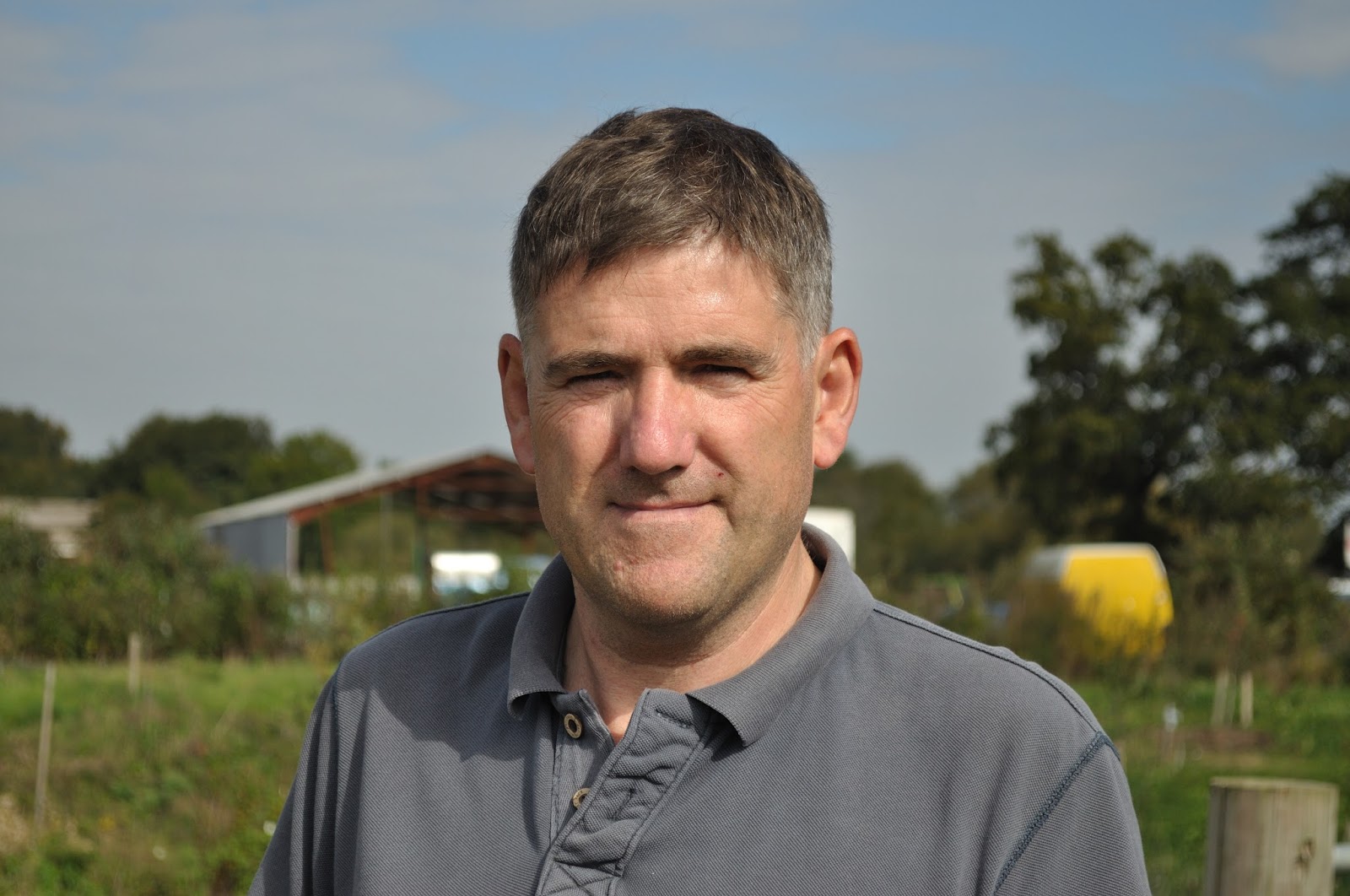
Andrew - Team Leader


Kate - Team Leader
 
Jon - Team Leader


There are three requirements for all effective team leaders and each leader must have each skill         
§  Skill in communicating with and managing a group.
§  Sufficient time to devote to thinking about the issues, communicating with the team and leading and training the team by example.
§  Sufficient horticultural knowledge and skills in growing the crops and dealing with some of the basic issues that arise and the humility to ask for help when it is beyond their experience.

If a new leader lacks one of those skills it will soon become apparent. The leader can do damage to the organisation, but fortunately they tend to move on quickly.

Team leaders have tended to stay on their own plots and with their own teams, although team members may move to a different plot if inclined. Team leaders and members feel that they have put effort into improving the soil and developed relationships with their team and so few feel inclined to move to other plots. Team leaders meet together monthly for review and planning meetings and the sharing of information and ideas has helped them to upskill. Expert growers centrally organise the purchase of seed and plan crop rotation

We have found that it is really helpful when the teams are put together that there are a mixture of ages and skill/knowledge levels. Older retired people can come down during the week when younger folk may be tied up with families and work.  They are very useful for making bits of equipment or putting up sheds or doing some of the routine tasks in the polytunnels, like watering. Younger people should have the strength for sustained periods of digging or weeding. Children have always been welcome as what they learn in their formative years will influence them for life.

Team leaders have been encouraged to have regular dialogue with all members. For most team leaders this involves a weekly email, Facebook messages or phone conversation over what needs to be done. Some teams maintain a plastic box on site with a notebook in and leaders and members write there what needs to be done and what has been done. Inevitably members who turn up at peak times such as a Saturday morning or an agreed weekday time will establish the strongest bonds within the team.

However not everyone will be able to attend at peak times for a number of reasons and it is essential to find an effective way of communicating. If a team member seldom or never attends at the same time as the team leader or regular members of the team it can be very frustrating for the team leader. One technique that seems to have been successfully adopted by the Fruit group and some vegetable groups is to give members who can't always make the Saturday or Wednesday group activities their own distinctly different responsibilities: one supervises the raspberry plot, another the gooseberries, a third the rhubarb bed, another the redcurrants and blackcurrants polytunnel, another mows one of the orchards and yet another strims in an orchard. So if a person turns up irregularly they know they have an area and a crop to check on and they can plan what will need to be done in the coming weeks. The members of a team who are more regular can work together on bigger crops like the fruit trees or projects such as fertilising, pruning or fencing.

Another alternative for those who are unable to attend on Saturdays or Wednesdays and be part of a team is for the team leader to find out when the invisible member does turn up and try to fit him/her into a team or an activity that is meeting at that time. Otherwise people who never meet with the group are likely to become less effective in what they do when they are at the farm and potentially more likely to leave the project because they do not benefit from the community social component. For example there are activities on Monday and Wednesday mornings for the A team- those who are retired and who enjoy building or repairing. 

 There are various other responsibilities within a community growing project

1. Site Manager with responsibility for buildings and constructions including sheds, compost bins, water tanks, water supply, supply of refreshments and the tea hut and liason with the farmer.

2. Environment Officer with responsibility to keep the site tidy, bins emptied, grass mown and rats controlled.

3. Update writer who sends out an email once a week with information to all project members

4. Archivist who collects pictures and other memorable information

5. Small team of expert growers who plan together which crops will go where, organise the purchase of seed, produce notes to advise team leaders and their teams and are available for consultation.

6. Tool repair person who replaces broken handles on tools etc.

7. Manure coordinator - responsible for finding horse manure and getting it to the site.

8. Compost maker - responsible for managing our 11 compost bins.

9. Clean pot storage - cleans pots and keeps the pot shed tidy.

10. Food sales co-ordinator - finds out what food is available and whether it is on a team harvest or a pick your own basis and communicates this to members via noticeboards and the Update writer.

11. Water co-ordinator, responsible for filling the IBCs.
David- badge maker


Various small sub committees are appointed to deal with issues as they arise. Usually there is a member of the steering committee, a couple of team leaders and any experts within the project.
 
All Photos in this blog by Wayne Landen


Friday, 1 July 2016

Looking after our soil


 Our basic aim is to feed the soil and the plants will grow. We avoid using manufactured and chemical products wherever possible, preferring to using natural organic products to fertilise our soil and replace the nutrients that our harvest of fruit and vegetables takes from the soil. Our preferred materials are our own made compost from plant remains and horse manure.

Our soil is good but rather heavy and
very stony. We are trying to improve it
by adding more organic matter
The 11 compost bins. Notice how the different designs on the
side ensure that the planks are replaced in  the correct order.
A pile of weed prior
to being composted
Initially we used our own compost made from all our crop leaves, stems and roots that are not to be sold plus all the weeds growing on the plots. We mainly use cool composting which is a slower method of composting than hot composting, but does not require regular turning of the heap. Initially we added our plant and weed remains and then a layer of brown material such as leaf litter, torn up newspaper or cardboard, straw or wood chippings. This slow method of maturation at low temperatures means that a relatively low proportion of the carbon in the pile has been converted to carbon dioxide during the maturation process. Furthermore the final product should be high in fungal hyphae and mycorrhiza which will promote root growth when applied to the soil.
However a problem was experienced with this method of cool composting: sometimes some of the more persistent weed roots remained in the compost. So in 1915 the decision was taken to remove the roots of 5 pernicious weeds which grow in abundance in the fields: couch grass, bindweed nettles, docks and dandelions. These roots and any seeding parts were placed in a large woven plastic bag which was placed in  a barrel. When the bag was full of plants the barrel was filled with water so drowning the weeds and causing them to die and decay anaerobically. After about a month the weeds had died. When all the weeds were dead the bag was removed and the contents of the woven bag were composted. The liquid was used as a compost tea which was available for watering on the plants. Generally it was diluted to 1 in 5 of its original concentration.
We have 11 compost bins in which we make compost and 8 40 gallon drums for making liquid feed.

Green waste going in the bin
We also use manure which is obtained from local stables and has been thoroughly rotted generally for up to five years. We tend to purchase manure by the trailer or lorry load often buying as much as 60 tonnes for use on about 2.5 acres of land in a year. The cost is chiefly for the hire of the vehicle. Manure is generally spread on the fields in October after the summer crops have been harvested and

Mike our compost supervisor digging out mature compost
before the plot is covered with black plastic for the winter. The black plastic stops weeds growing and prevents leeching of nutrients through heavy winter rains. The worms pull the compost into the soil   during the winter.

Newly added compost to bin 11 and the 40 gallon drums


Four of the 40 gallon drums. Approximately one drum is
filled a month and then left for four months.


Notice explaining what to do with the pernicious weeds
We also have used Progrow,  Veolia Progrow is a soil conditioner produced by Hampshire County Council  (from green recycled waste which has been allowed to heat to high temperatures). It  has a structure that will break down heavy clay soils and add humus to light sandy soils.  Progrow looks like small charcoal like pieces (not actually called biochar) which are dry and fairly light. We have used it extensively to lighten the soils. However it has a pH of 8.4 and when mixed with our clay with chalky flints soil we find that the pH is generally between 7- 8 and thus too alkaline for the health of some fruit and vegetables which prefer the pH to be 5.5-6.5. Some crops did not seem happy growing at pH's above 7 and when we investigated we found that it was due to boron deficiency due to the high pH.  So we have dramatically reduced and then eliminated our use of progrow. Where we suspect that a crop such as cauliflowers or kohlrabi is suffering from boron deficiency we have used a seaweed preparation called maxi-crop to add more boron. We are attempting to lower the pH and increase the acidity of the soil by adding pine needles and composted leaves. We could add sulphur chips or sulphur dust or sulphate salts such as potassium sulphate, aluminium sulphate or ferrous sulphate but as far as possible prefer to use natural fertilisers.  

Recently coffee grounds have been obtained from local cafés and used as a nitrogen source and a deterrent to molluscs who evidently lose their appetite in the presence of coffee.

It is important to avoid losing soil from the farm during harvesting or weeding, so we ask people to take care to remove as much soil as possible from both the food part of the plant before it is taken home and to shake weeds before they are added to compost heaps.


Wednesday, 29 June 2016

Getting going

The farmer ploughed the field the day before
our new members arrived
When a reasonable number of applications had been received it was then necessary to go through them and identify those who could become growing team leaders or have other potentially useful skills.

There are three requirements for all effective team leaders and each leader must have each skill.
  1. Skill in communicating with and managing a group
  2. Sufficient time to devote to thinking about the issues, communicating with the team and leading and training the team by example
  3. Sufficient horticultural knowledge and skills in growing the groups and dealing with some of the basic issues that arise and the humility to ask for help when it is beyond their experience
Our new empty field
The path was marked out and the 20 plots set
If a new leader lacks one of those skills it will soon become apparent. They can do damage to the organisation, but fortunately they tend to move on quickly.


We have found that it is really helpful when the teams are put together that there are a mixture of ages and skill/knowledge levels. Older retired people can come down during the week when younger folk may be tied up with families and work. They are very useful for making bits of equipment or putting up sheds or doing some of the routine tasks in the polytunnels, like watering. Younger people should have the strength for sustained periods of digging or weeding. Children have always been welcome as what they learn in their formative years will influence them for life.

Start up costs are relatively minor. We needed money for insurance and advertising. Some projects may need to pay rent in advance. Clearly if you are intending to buy land for a growing then you will probably need some form of external funding. By the time we started we had a rather ramshackle collection of tools, donated by members, elderly parents of new members, friends or picked up at the local Council tip. We know of some projects who have been given tools by their local DIY supermarket or hardware shop. As soon as we had money from members' subscriptions we were able to buy some essential tools like wolf hoes that greatly speed up weeding of previously dug soils. These were all kept in a small wooden shed that had been donated.


We collected up many stones and used
them to make the central path
While some members may be prepared to donate old or surplus seed stocks, we found it better to buy our own selected fresh seed for most of the larger crops. With time we have developed links to our suppliers which have been very beneficial. We took advantage of our local Allotment association shop which sell seeds and equipment to members at below shop prices. 
We call it the Roman road

Our inaugural meeting took place on Friday 9th April 2010. Over 60 people had turned up. The major points that were emphasised there were that we are:
  • a community project, which means everyone will be expected to work together.
  • a Co-operative, working in a very positive relationship with each other with give and take and trust as fundamental components. 
  • involved in a new venture. We shall have lots of successes but mistakes will be made
  • a simple start but will diversify and expand as we go
  • worki
    ng in a hazardous place so need to be aware of health and safety issues.
Our treasurer then gave us a provisional budget for the year:


Income


Expenditure


Stakeholders

£1,000

Seed

£500


Insurance

£210


Leaflets

£190


Hire of church

£50

Sub-Total

£1,000

Sub-Total

£950


Sale of produce to Stakeholders

£2,000

Fencing and plot rent

£2,000

Sale of any surplus produce to the public

£1,000

Hire of market stall

£200


Total

£4,000

Total

£3,150


Potential Surplus

£850


A few of the courgettes that those seeds grew
All who had attended the inaugural meeting had been given a few courgette and butternut squash seeds to get going in the warmth of their homes and bring on for planting out when conditions were a bit more favourable. One of our team leaders had grown some lettuces at home so these were planted out as soon as the ground had been cleared.

Recruitment, critical mass and launching

Initial publicity posters of Eastleigh Transition Network


A significant sized group is necessary to get a project off the ground. We were very fortunate to have a small group of about 12 people who were committed to Transition values and local food production in ETNet. Most of the original 12 are still involved. A variety of skills are needed to get a project off the ground including horticultural knowledge, vision, community development, financial, leadership, writing, publicity and secretarial skills.
It is also necessary to have a critical mass of housing within journeying distance. We thought the best method to gain interest was to leaflet the local areas and so we leafletted 8000 houses. There were a little over 200 responses. Our experience suggests that 1-2% of households respond to door to door leafletting, so if you need to bring in 10 new members you may need to distribute to 1000 homes in the area.
Door to door leafletting is the most effective way to ensure that the majority of people have heard of your project, although many households will throw the leaflet in the bin with scarcely a glance. Leafletting is also expensive. We then decided to get a leaflet designed, produced and deliver it to up to 10,000 homes in the area. One of our team asked a friend to provide us with the artwork and liaised with the printer who was willing to produce 10,000 A5 sized fliers. Notices advertising the project on community and church noticeboards may well bring in some new members.

Our observations and research suggest that people with large gardens may be less likely to get involved as they may already have enough space for growing their own fruit and vegetables. We know of attempts to form community farm groups in small villages where most people have large gardens have been less successful as there were a smaller number of people who would be interested in such a project and the number may be insufficient to give the project critical mass. In these situations community orchard projects seem to have been more successful. Conversely people living in houses with small gardens or flats are often keen to join.

Someone needed to be available to answer each telephone enquiry or email for a period of about a month. Forms were emailed out and occasionally posted, and the data collated when the responses are returned. It is worthwhile collecting full contact details at the outset. We wanted to ascertain the applicant's skill level. We used a scale of 1-5 for complete novice to expert grower. It was helpful to learn something of the past experience of those with growing experience because they could make team leaders but might have been too shy or self-deprecating to offer. We tried to discover other skills which could be useful to the project and whether they could introduce new aspects to the project which we had not thought of. We wanted to discern the applicants' preferences within the various groupings of the project. Are they able to undertake heavy gardening duties or just take on lighter tasks and will they have sufficient time to fulfil their obligations? We wanted to ensure that all applicants understood the responsibilities and privileges involved in the work. So much of a project like ours is undertaken on trust and so we explained to potential recruits that they were expected to behave in a trustworthy way.

We have always believed that our activities must be sustainable by our own efforts, so we have never applied for a grant. We look at some organisations who spend the first year applying for funding and doing little else and we smile and think back to how we rolled up our sleeves and got on with organising our new members and preparing the ground. Throughout our six years all of our income has come from membership, sale of produce or special members events. Some of our equipment has been donated, some has been purchased with our own funds. We feel that we are resilient!

The period from February to April 2010 was frenetic for the Highbridge Community Farm organising team. First we met to formulate a plan. We would start a workers co-operative by inviting 100 people to pay £10 for a year to become stakeholders, commit to working 10 hours over the year (a hopeless underestimate), in teams of 10, each team growing 1 crop. Then at harvest time all the produce would be made available to all the stakeholders to buy for approximately 1/3 of the shop price. Each team would have a team leader who would decide when and how to sow, weed, water and harvest the crop and the selling price. It seemed simple really. We were soon to learn that 10 hours a year was a hopeless mis-calculation of the time needed to get the land into production and soon revised the figure to an expectation of 10 hours per month.

We then decided to get a leaflet designed, produced and deliver it to up to 10,000 homes in the area. One of our team asked a friend to provide us with the artwork and liaised with the printer who was willing to produce 10,000 A5 sized fliers. Two looked into insurance, health and safety issues and funding issues. As it happened the farmer Mr Russell wasn’t keen on us applying for funding as such a young organisation, so we concentrated on getting the flier produced and delivered to about 8000 homes. Individuals loaned the project money to supplement the finances of the ETNet kitty and to raise the £200 for printing the leaflet and membership card. We also began to prepare for an inaugural meeting, in a church close to the centre of our catchment area.
Getting ready for the launch - our facilities
One bare, ploughed field

The enquiries and applications came in rapidly. Within six weeks, by the end of March we had nearly 200 enquiries, either by phone or email. Each one had to be dealt with individually as they had specific questions for us and we had specific questions for them. We sent all enquirers a three page introduction with brief questionnaire, asking them to state their three preferences for growing teams and to give their experience on a scale of 1 (novice) to 5 (very experienced). Approximately 70% were novices with little or no experience of growing their own food- so we were assured of the educational value of the project. The first 100 to return their forms with £10 were made stakeholders. 85% of stakeholders were assigned to their first preference crop team and another 10% to their second preference. The late applicants were fitted in where there were spaces. Subsequent enquiries were put on a waiting list.
We were ready to launch. But would it work?
...and some willing workers